For most of horological history, grand complications have been a kind of white elephant — enormous, forbiddingly complex and so fragile that every attempt to use it risked catastrophe. Feats of intellectual bravura they may be, but never instruments made for actual owner experience.
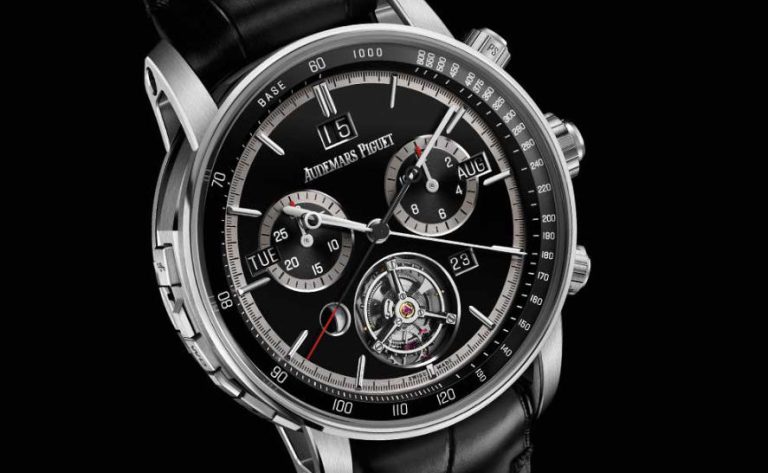
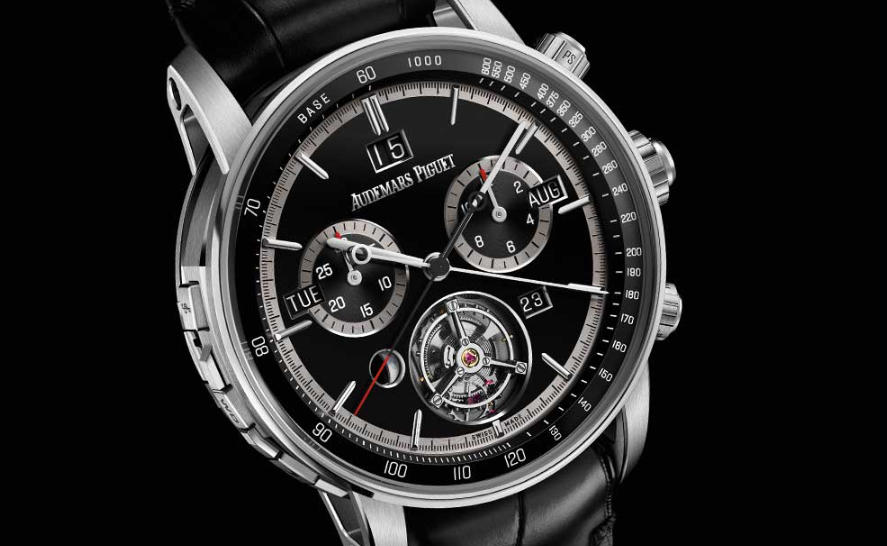
The perfect replica Audemars Piguet Code 11.59 by Audemars Piguet Ultra-Complication Universelle RD#4 watches launched in 2023 dramatically altered this paradigm. It demonstrated that a grande complication could be compact, robust, coherent in design and intuitive to use, while encompassing the full suite of traditional high complications and more. Measuring 42mm in diameter and only 15.5mm in height including its hinged back, it contains a perpetual calendar accurate for centuries, a grande and petite sonnerie with repeater function, a split seconds flyback chronograph and a flying tourbillon, all integrated into a self-winding caliber of just over 1,100 components.
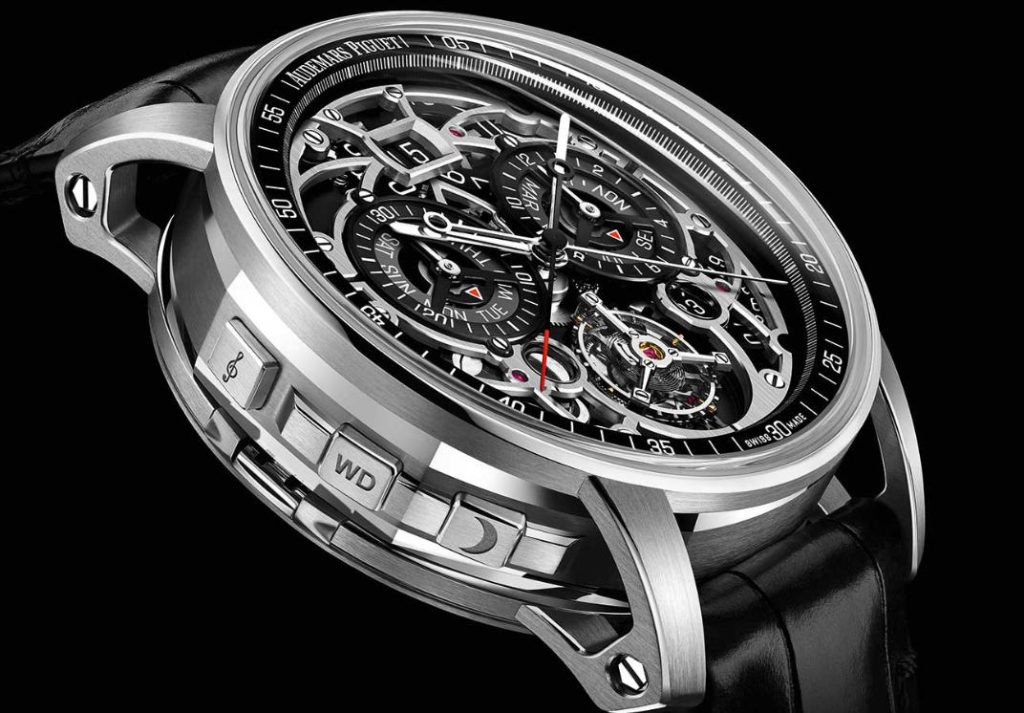
The Caliber 1000 was the product of seven years of development and represents the consolidation of earlier RD 1:1 fake watches. It reconsiders how complications are arranged, controlled and worn, while advancing the execution of each one. The perpetual calendar exemplifies this shift. Rather than encoding a conventional four-year leap-year cycle, it incorporates a centurial cycle, automatically accounting for non-leap years that occur at the end of each century. It will remain accurate without correction until every 400 years where it becomes a leap year again. Mechanically, this manifests in a program wheel that encodes 36 months rather than the usual 48, meaning February is always cut for 28days and leap years are not encoded directly. A separate leap-year cam then intervenes, limiting the drop of the grand lever into the February notch so that the month runs to 29 days every four years, while a century cam acting through an additional lever blocks this correction once every 400 years, ensuring that century years not divisible by 400 are treated as common years. A 36-month program wheel allows for a more compact system with a year display driven directly off the secular gear train.

Additionally, to reduce height, the mechanism consolidates what would normally be multiple layers into a single one. The end-of-month cam is integrated into the date wheel, which usually consists of three layers including the finger for advancing the month wheel, while the month cam is integrated into the month wheel, normally spread over two layers. In this way, the program wheel and the date wheel serve as both a gear and a cam, capable of being driven and sampled.
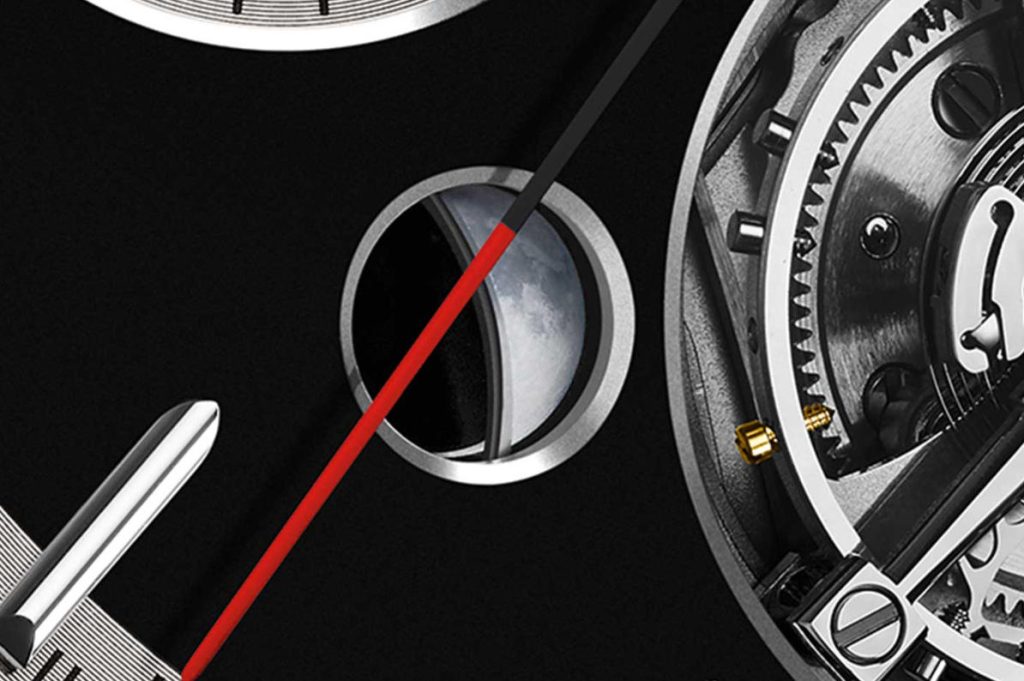
The moonphase is also ingeniously compact yet realistic. It employs two concentric disks with six printed positions each, generating 10 transitional stages in the lunar cycle. More significantly, the two disks reproduce with greater fidelity the shifting shape of the terminator, the boundary between the illuminated and shadowed portions of the Moon. The result is a representation that is not only mechanically efficient but visually closer to the astronomical phenomenon it depicts. Adjustment is equally advanced. The moonphase and day are set by caseband pushers, while date and month can be adjusted bidirectionally by the crowns without risk of damage.
The sonnerie is equally significant. A grande sonnerie, which strikes the hours and quarters in passing, is the most complex complication in top copy watches, adding three distinct mechanisms to the basic minute repeater, namely an automatic release for the sonnerie, a manual release for the repeater and a silencer. Additionally, the strike racks were reconfigured to eliminate the irregular pauses traditionally heard between hours and minutes when no quarters are struck, producing a consistent cadence. The minute repeater, meanwhile, is actuated by a pusher rather than a slide, contributing to both water resistance and user accessibility.
More than that, it also employs the Super sonnerie technology in which gongs are mounted on a resonating soundboard between the caseback and the buy clone watches. The soundboard is a sapphire crystal, only 0.6mm thick, which both amplifies resonance and reveals the movement beneath. A hinged gold outer back with apertures enables sound to be projected when worn on the wrist, while the case remains water resistant to 20m. At 6 o’clock is a flying tourbillon with a free-sprung balance beating at 3Hz. The geometry, developed for the RD#3, extends the distance between balance and pallet fork pivots, allowing very high amplitudes without over banking and enabling greater torque in the barrels. In contrast to the RD#3, which employed a flat hairspring for reasons of thinness, the RD#4 reinstates an over coil to optimize isochronism.
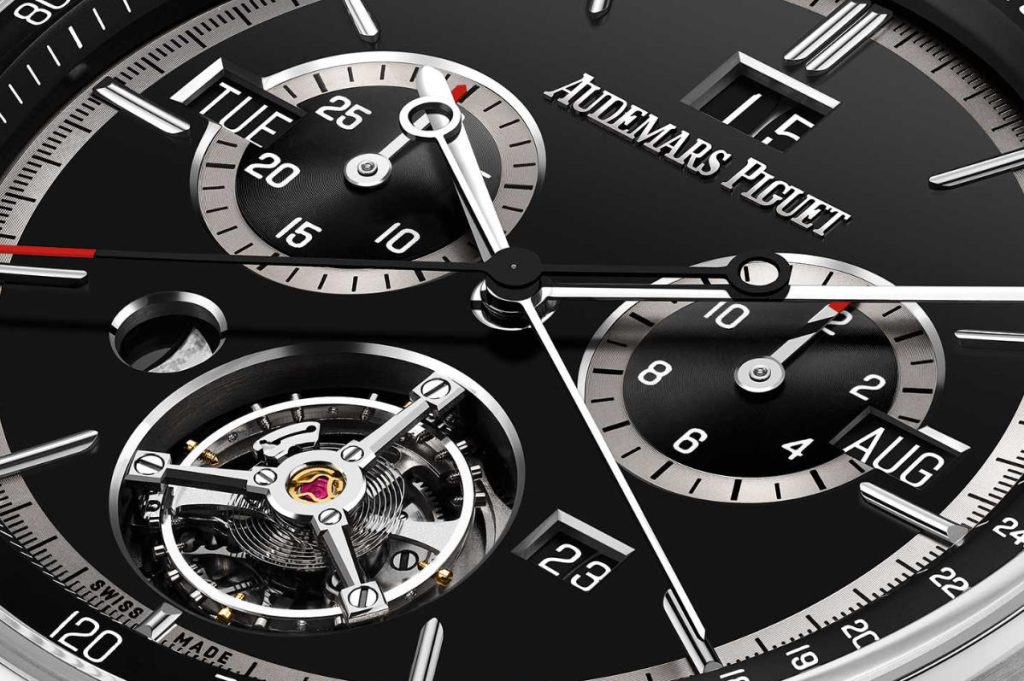
The chronograph demonstrates a further innovation. The lateral-clutch, flyback chronograph incorporates a split seconds mechanism, but unlike traditional rattrapantes, the split assembly is housed within the hub of the automatic rotor. The split wheel, clamps and column wheel are arranged inside the oversized ball-bearing housing, saving height and leaving the chronograph visible.
All functions are accessible through labeled crowns and pushers without the need for a stylus. The result is a level of operational clarity unprecedented for the best replica watches of such complexity. It has fundamentally changed the way we view complexity, namely that it need not exist for its own sake.
About the Author